By the HBK Customs Compliance Team | Updated June 2026
The weak yen has turned 2026 into one of the best sourcing windows in years. Japanese households and offices are clearing out high-quality furniture, appliances, and machinery, and Filipino buyers are hungry for affordable, durable secondhand goods. Starting a Japan surplus business right now looks like easy money. Then the first container lands at the Port of Manila, sits under a Yard Lock, and the storage fees start climbing. That’s where most first-timers learn the hard way that the profit isn’t made in Osaka. It’s made — or lost — at customs.
This is the part nobody tells you about, and it’s exactly where HBK Global Trading steps in.

Why 2026 Is the Window for a Japan Surplus Business
The math is simple. First, a weak yen stretches your buying power in Japan further than it has in years. At the same time, local demand for secondhand furniture, kitchen equipment, and light machinery keeps rising. Japan is also one of the Philippines’ top import partners. The surplus trade rides on that same well-worn shipping lane. The opportunity is real — but it rewards operators who treat this as a logistics business, not a shopping trip.
The Hidden Wall: BOC Accreditation
The Problem
You cannot legally bring in commercial cargo on a whim. To clear goods as a business, you must first register as an importer in the Bureau of Customs’ Client Profile Registration System (CPRS). As of April 2026, importer accreditation now carries a three-year validity. However, getting that first accreditation still means TIN verification, a nominated broker, and a bank reference. That paper trail trips up newcomers for weeks. Some try to dodge it with a “Non-Regular Importer” shortcut. As a result, they land in the BOC’s Compliance Monitoring Database — a classic Audit Trap. That flag follows every future shipment.

The HBK Solution
We act as your Importer of Record. Your container clears under our standing accreditation while you focus on selling, so you can launch this month instead of next quarter. When you’re ready to stand on your own accreditation, we walk you through CPRS the right way.
The Surplus Trap: What You Legally Can’t Ship
The Problem
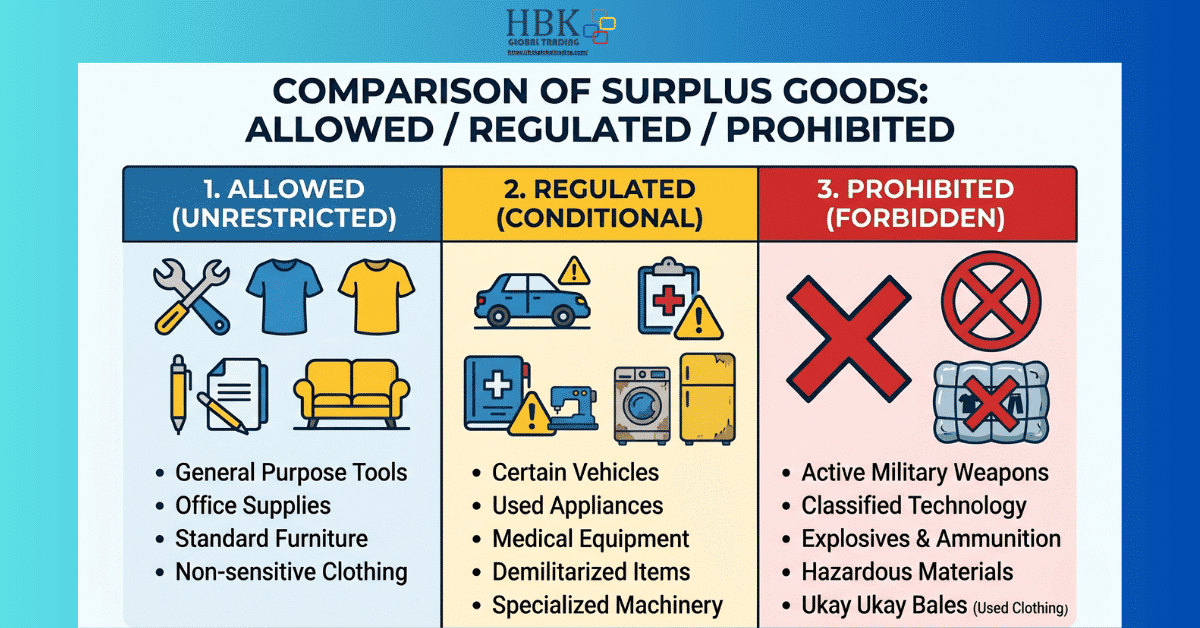
“Surplus” is not a free pass. Pack the wrong items into a mixed container and you’ve built your own Red Lane Trigger. Two traps catch new importers constantly:
• Used clothing is banned outright.
That ukay-ukay bale you were quoted in Japan? Importing secondhand clothing into the Philippines is prohibited under Republic Act No. 4653. Mix it into a furniture container and you risk a Warrant of Seizure and Detention (WSD) on the entire shipment — not just the clothes.
• Used appliances and vehicles are regulated, not free.
Secondhand electrical appliances, telecom equipment, and used motor vehicles are regulated goods. They require permits and standards clearances before arrival. No permit, no release — the cargo simply sits, accruing charges.
The HBK Solution
Before your goods leave Japan, we run a Mock Audit on your packing list and invoices, separating clean fast-movers from regulated or prohibited items. We secure the right clearances in advance so your container moves through the green lane instead of stalling under inspection.
Your 2026 Surplus Roadmap, Simplified
Strip away the jargon and a compliant Japan surplus business comes down to four moves: source smart while the yen is weak, screen every item against the regulated and prohibited lists, clear customs under a fully accredited importer, and price in your real landed cost — duties, taxes, and freight included. Skip any one of these and the storage clock does the rest.