
By the HBK Customs Compliance Team | Updated June 2026

⚡ Quick Answer
The myth: Air freight is a 5x–10x luxury you only pay in emergencies.
The reality for tech: Once you count the hidden costs of sea freight — capital tied up in transit, Manila port storage and congestion fees, higher insurance, heavier packaging — air freight often wins the Total Landed Cost (TLC) math for high-value Taiwan electronics.
Who it’s for: Importers of semiconductors, consumer tech, and high-margin industrial components where capital velocity and arrival certainty matter more than the sticker freight rate.
HBK’s role: We run a full TLC analysis and pre-clear your air cargo at NAIA so release often happens before storage charges even start.
For years, logistics “common sense” was simple: air freight is a luxury. You pay that 5x-to-10x premium only when something has already gone wrong. But for high-margin electronics and industrial components out of Taiwan, that math has quietly flipped.
Here’s why. When Manila’s sea gateways tighten and port costs climb, the sticker freight rate stops telling the truth. But the real number is your Total Landed Cost — everything it takes to get goods from the Taiwanese factory floor into your warehouse, sellable. Count all of it, and for high-value tech the gap between air and sea narrows fast — often closing entirely.
At HBK Global Trading, we’ve moved past simple freight quotes. In the years we’ve spent clearing high-value electronics through NAIA, we’ve watched importers celebrate a “cheap” sea rate and then quietly bleed the savings back out in storage fees, tied-up capital, and congestion delays. This is the part the freight quote never shows you — and it’s exactly where Taiwan air shipping earns its keep.
THE INVENTORY HOLDING TRAP
Capital Is Not Free: Inventory Velocity and Taiwan Air Shipping
The biggest hidden expense in your supply chain isn’t freight — it’s inventory holding cost. The moment high-value Taiwanese semiconductors or consumer tech leave the factory, your capital goes “dead.” You’ve paid for it, but it isn’t sellable yet, so it earns you nothing.
Industry estimates put that annual holding cost at roughly a fifth to a third of the goods’ value. Now stack on the transit gap. Sea freight from Taiwan, slowed by truck-supply constraints and port dwell times, can tie your capital up for two to three weeks. Air freight cuts that “dead time” to around 48 hours. So you recover and reinvest your capital while your sea-shipping competitor still waits at the dock. That’s inventory velocity — a real, bankable edge our Taiwan-to-Manila air service is built to deliver.
ESCAPING THE MANILA “CHARGE PILE”
How Port Congestion Quietly Inflates Your Sea-Freight Bill
When Manila’s yards run hot, sea freight develops a second price tag: the Charge Pile — a compounding stack of storage, cranage, and administrative fees that builds while your container waits. In a saturated yard, operators shuffle boxes to reach yours, and every shuffle adds hours. And if your box overstays its free time, you don’t just lose days — you pay a daily premium for the delay.
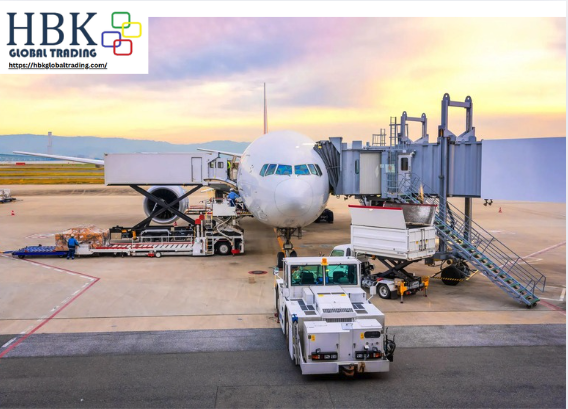
Air cargo at NAIA sidesteps the maritime congestion entirely. NAIA has its own storage rates, but they’re predictable. Better still, we manage them with a Pre-Alert Protocol: we begin your customs clearance while the plane is still in the air, often securing release before storage charges ever start.

THE “SOFT” SAVINGS: INSURANCE & PACKAGING
Why Air Freight Lowers Costs You Don’t Put on the Invoice
High-margin goods need high-grade protection, and sea freight makes that expensive. Containers take real “G-force” hits during crane handling and sit in constant humidity for weeks — both of which push up insurance premiums for delicate electronics. Air freight is gentler and more controlled: airports like Taoyuan (TPE) and NAIA involve tighter security and far less manual handling than maritime terminals.
There’s a packaging dividend too. Because air cargo isn’t crushed under stacked containers, you can use lighter, less expensive protective packaging — which lowers your chargeable weight and trims the true landed cost, closing the air-vs-sea gap even further.
SPEED AS COMPLIANCE PROTECTION
How Fast Shipping Lowers Your Seizure Risk
Total Landed Cost is the sum of everything required to get goods from the supplier’s door into your warehouse, ready to sell — not just the freight rate. It includes ocean or air freight, customs duties and VAT, inventory holding cost while capital sits in transit, port storage and demurrage, insurance, and packaging. For high-value Taiwan electronics, the freight rate is often only a minority of that total. That’s why a “cheap” sea quote can end up more expensive than air.
Speed also reduces a cost most importers never price in: regulatory exposure. The Bureau of Customs monitors overstaying containers closely. So a box that lingers in a congested yard, past its dwell-time window, becomes a candidate for abandonment proceedings or a Warrant of Seizure and Detention (WSD). Fly the cargo and clear it fast, and you shrink the window in which customs can flag a shipment, revalue it against EVRIS benchmarks, or tie it up in port-side red tape. In short, speed itself becomes a compliance safeguard.
AIR vs SEA: THE FULL LANDED-COST PICTURE
Total Landed Cost, Component by Component
If you’re only comparing freight rates, you’re seeing a fraction of the real picture. Here’s how the full TLC stacks up for high-value Taiwan tech.
| Cost Component | TAIWAN AIR FREIGHT | TAIWAN SEA FREIGHT |
| Headline freight rate | Higher | Lower |
| Transit / capital “dead time” | ~48 hours | ~14–21 days |
| Inventory holding cost | Minimal (fast turnover) | Significant (capital tied up) |
| Port storage / congestion fees | Predictable NAIA rates, pre-cleared | Charge Pile risk in saturated yards |
| Insurance premium | Lower (less handling, less humidity) | Higher (G-force, humidity, dwell) |
| Packaging | Lighter, cheaper | Heavier, reinforced |
| Seizure/WSD exposure | Short window | Grows with dwell time |
The takeaway: the freight rate is roughly 40% of the story. For high-margin Taiwanese trade in a congested-port year, air is the new sea.
Taiwan Tech Shipping: Frequently Asked Questions
Is air freight really cheaper than sea freight for electronics? Often, yes — once you compare Total Landed Cost rather than the freight rate alone. For high-value Taiwan tech, sea freight’s tied-up capital, port storage, higher insurance, and congestion delays can erase its sticker-price advantage. In practice, air freight’s speed and lower handling frequently close or flip the gap.
What is Total Landed Cost (TLC)?
It’s the all-in cost of getting goods from the supplier to your warehouse, sellable: freight, customs duties and VAT, inventory holding cost, port storage and demurrage, insurance, and packaging. The headline freight rate is usually only a portion of it.
How does Manila port congestion add to my costs?
When yards run above their optimum, containers get “shuffled” to reach yours, truck turnaround slows, and overstaying boxes accrue storage fees — the “Charge Pile.” Air cargo at NAIA, pre-cleared, largely avoids this congestion.
Can faster shipping reduce my customs and seizure risk?
Yes. The BOC watches overstaying containers, and a box that lingers in a congested yard can face abandonment proceedings or a Warrant of Seizure and Detention. Flying and clearing fast shrinks that exposure window.
Do Taiwan tech imports get a duty discount like ASEAN goods? No. Unlike China (RCEP) or ASEAN origins (ATIGA), Taiwan has no preferential FTA with the Philippines, so there’s no Certificate-of-Origin duty break. That makes correct HS classification and a defensible declared value especially important — there’s no FTA cushion if you get it wrong.
If you’re only looking at the freight rate, you’re seeing about 40% of the picture. In a volatile, congested-port year, air is the new sea for high-margin Taiwanese trade. And the importers who win are the ones who measure the whole cost — not just the cheapest line on the quote.
Let HBK run a full Total Landed Cost analysis for your next shipment. Call our direct line at 0917 833 8008, message us through our contact page, or visit us at Unit 106, Minnesota Mansion, #267 Ermin Garcia Avenue, Quezon City (1102) — open Monday to Friday, 9:00 AM–5:00 PM, and Saturdays, 9:00 AM–2:00 PM.
Keep reading from the HBK Customs Compliance Team
• Sourcing from Taiwan in 2026: Importing High-Value Electronics to the PH
• Industrial Precision: The LCL Advantage for Taiwan Machine Parts
• Sourcing the Latest Tech: Importing Electronics from Hong Kong
• Beyond the Price Tag: How to Calculate Your True Landed Cost
• Philippine Customs Clearance: A Guide for Importers
Official references
• Bureau of Customs (BOC) — yard utilization updates, dwell-time rules, EVRIS valuation
• Philippine Ports Authority (PPA) — Manila port cargo-handling tariffs (MC 018-2025)