
By the HBK Customs Compliance Team | Updated June 2026

⚡ Quick Answer
What it is: A rush air-freight lane for urgent auto parts to the Philippines — ECUs, sensors, brake calipers, aftermarket upgrades — flown from Bangkok (Suvarnabhumi) to Manila in 24–48 hours, versus two-plus weeks by sea.
Who it’s for: Repair shops, performance tuners, and fleet managers facing a Vehicle Off Road (VOR) situation where every grounded day costs money.
The catch: Auto parts are heavily scrutinized at the border. Wrong HS codes or a valuation that clashes with the BOC’s EVRIS benchmarks can throw your shipment into the Red Lane for physical inspection — killing the speed you paid for. HBK clears that risk before the cargo leaves Bangkok.
Bonus: Many Thai-made parts qualify for 0% duty under ATIGA with a valid e-Form D. We secure it without delaying the flight.
There’s a specific kind of stress that repair shops and fleet managers know in their gut: the Vehicle Off Road (VOR) crisis. A project build stalls waiting on a high-performance brake caliper. A delivery truck sits dead in the yard because of a fried Electronic Control Unit (ECU). Every hour that vehicle is grounded, it’s burning money — and waiting weeks for a sea container simply isn’t an option.
That’s the exact problem our Thailand air freight lane solves. We get high-value automotive components from the “Detroit of Asia” into a Manila workshop in record time. When your supply chain hits an emergency, HBK flies your urgent auto parts to the Philippines — over the port congestion, straight into the mechanic’s hands. But here’s what separates a fast delivery from a failed one. With auto parts, the plane is the easy part. The border is where rush shipments die, and that’s the part we’ve engineered around.
AIR vs SEA: WHEN A VEHICLE IS DOWN
The VOR Crisis: 48-Hour Thailand Air Freight vs Weeks at Sea
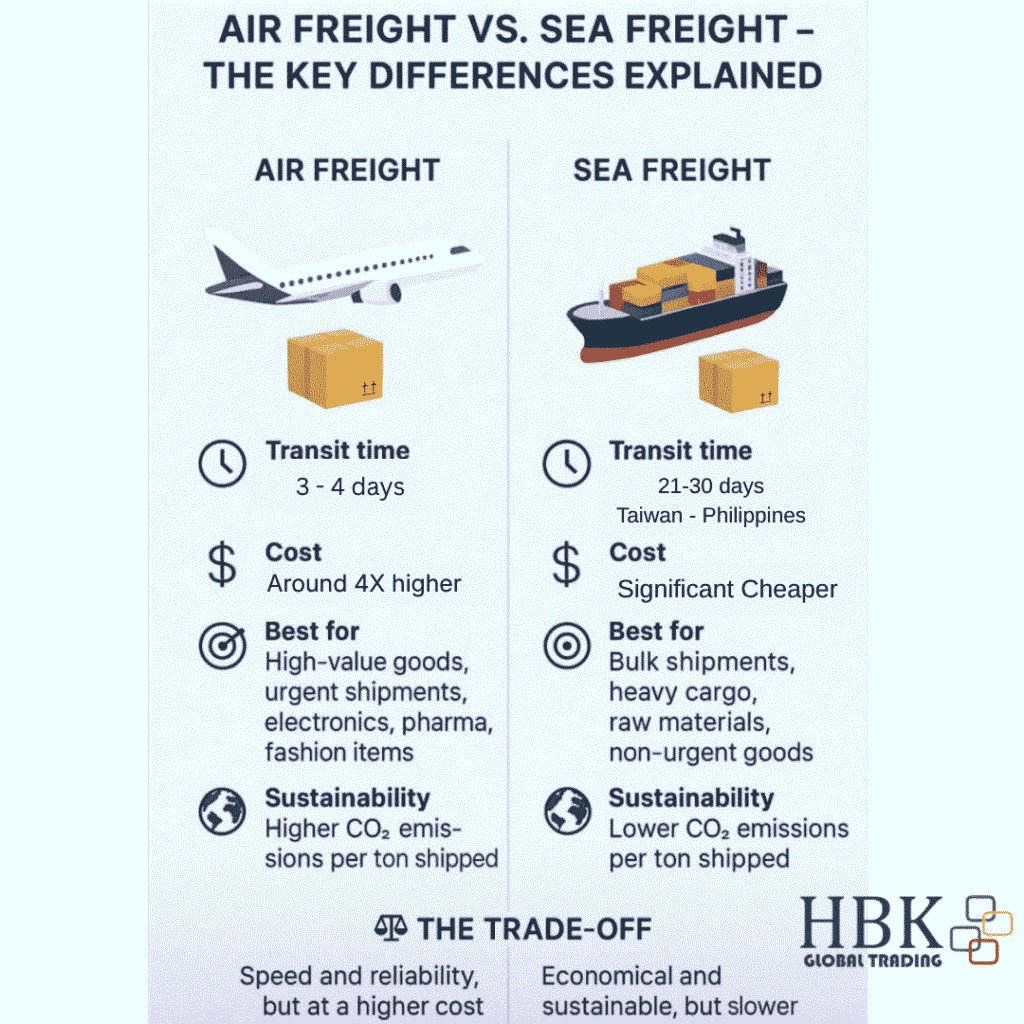
For bulk inventory — heavy chassis frames, commercial tires, full pallets — our standard ocean freight from Thailand is still the most cost-effective route. But it can’t solve an emergency. Maritime congestion can keep a container locked down for over two weeks — an eternity when a vehicle is grounded.
So our air express lane bypasses the sea port entirely. It runs a reliable 24-to-48-hour transit from Suvarnabhumi Airport (BKK) straight into NAIA. We expedite the parts that can’t wait — delicate sensors, control modules, custom aftermarket upgrades. As a result, your project hits its deadline instead of slipping it.
PROTECTING HIGH-VALUE ELECTRONICS
Why Modern Auto Electronics Belong in the Air
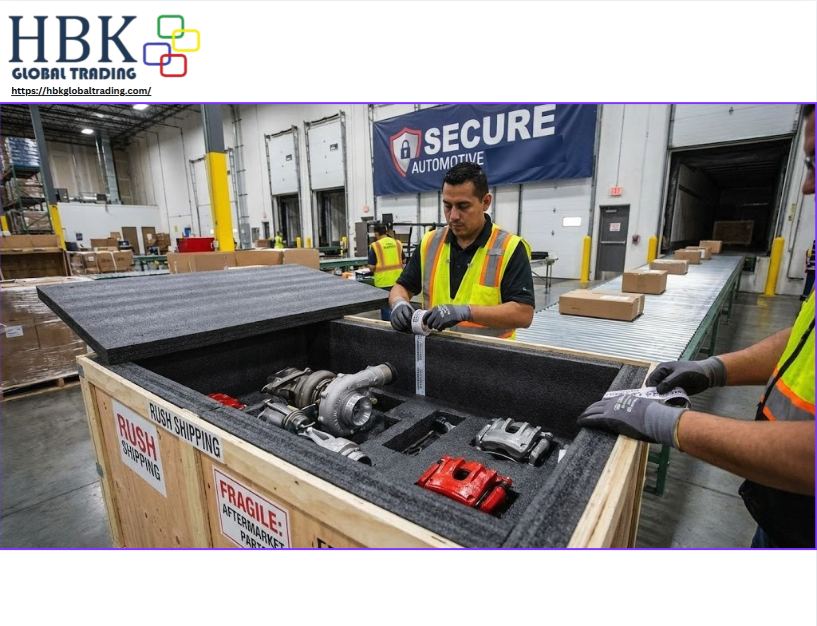
Today’s vehicles run on complex electronics, and that changes the shipping math. Ship an ECU, a hybrid battery-management system, or a digital dashboard by sea, and you expose fragile parts to weeks of humidity and constant vibration. That stress quietly corrupts factory calibration. Air logistics give those parts a climate-controlled, low-vibration ride instead. We apply the same rigorous handling we use for our high-tech Taiwan semiconductor lane. So your components land calibrated and ready to install — not bench-test and pray.
DEFEATING THE RED LANE — WHERE RUSH SHIPMENTS DIE
How to Keep Urgent Auto Parts Out of the Red Lane
Speed in the sky means nothing if the cargo gets stuck on the ground. Auto parts are among the most heavily scrutinized imports at the Philippine border. The most common trap is the EVRIS (Enhanced Value Reference Information System) valuation benchmark. The Bureau of Customs routinely flags aftermarket components for valuation disputes or incorrect HS codes. Either one can instantly route an urgent shipment into the Red Lane for full physical inspection. That means days of delay, storage penalties, and in the worst case a Warrant of Seizure and Detention (WSD).
The fix is preparation, not luck. Before the cargo leaves Bangkok, HBK runs a meticulous “description scrub.” We verify the exact HS code and a defensible declared value against the Bureau of Customs EVRIS benchmarks. That single step keeps a rush part in the fast lane. It also keeps your true landed cost accurate — no surprise revaluation, no storage clock, no seizure. In short, it’s the same discipline behind our full customs clearance process.
THE DUTY-FREE BONUS — EVEN ON A RUSH
Securing ATIGA Duty-Free Benefits on the Fly
Just because a shipment is urgent doesn’t mean you should overpay the tax. Under the ASEAN Trade in Goods Agreement (ATIGA), intra-ASEAN auto-parts tariffs have been eliminated since 2010 — so many components built in Thailand’s Rayong and Chonburi industrial clusters (the heart of the country’s Eastern Economic Corridor) qualify for 0% import duty.
The condition is documentation. You need a valid Certificate of Origin, now issued electronically as the e-Form D through the ASEAN Single Window (paper Form D only stands in during system downtime). We work directly with your Thai suppliers to secure the e-Form D at speed, so you capture the tax benefit without holding up the flight. It’s the same playbook we run across our ASEAN lanes — fast and duty-correct, not one at the expense of the other.

WHAT HBK ACTUALLY DOES
You Call. We Get the Engine Running.
• Pickup from your Thai supplier (Rayong, Chonburi, or greater Bangkok)
• HS code “description scrub” and valuation check before takeoff
• e-Form D Certificate of Origin filing for ATIGA duty savings
• Air freight Suvarnabhumi (BKK) → NAIA in 24–48 hours
• Climate-controlled, low-vibration handling for sensitive electronics
• Full customs clearance with EVRIS-defensible documentation
• Delivery to your workshop or fleet yard anywhere in the Philippines
You also get a complete landed-cost estimate before you book — so there’s no surprise bill when the part lands.
Urgent Auto Parts Shipping: Frequently Asked Questions
How fast can urgent auto parts reach the Philippines from Thailand? By air, 24 to 48 hours from Suvarnabhumi (BKK) to NAIA, versus two-plus weeks by sea once port congestion is counted. For a Vehicle Off Road situation, that speed is the difference between meeting a deadline and losing the job.
Why do auto parts get flagged for Red Lane inspection?
Usually a valuation that clashes with the BOC’s EVRIS benchmarks, or an incorrect HS code — both common with aftermarket parts. A Red Lane means full physical inspection, storage fees, and possible seizure. Verifying the code and declared value before shipping is what prevents it.
Can Thai auto parts enter the Philippines duty-free? Yes — most qualifying Thai-origin parts get 0% duty under ATIGA, which has zero-rated intra-ASEAN auto parts since 2010. You need a valid Certificate of Origin, now the electronic e-Form D via the ASEAN Single Window. HBK secures it with your supplier.
Is air freight safe for sensitive parts like ECUs? Yes, and it’s safer than sea for electronics. Weeks of maritime humidity and vibration can corrupt an ECU or battery-management module’s calibration; air offers a climate-controlled, low-vibration environment so parts arrive install-ready.
What is a VOR situation, and how does HBK help?
“Vehicle Off Road” means a vehicle is grounded waiting on a part — every day idle is lost revenue. HBK shortens that window by flying the component in within 48 hours and pre-clearing customs so it doesn’t stall at the border.
When a vehicle is down, the clock is ticking — and a missing component shouldn’t be allowed to paralyze your operation. Whether you run a performance tuning shop or manage a commercial fleet, HBK delivers the speed and the regulatory protection your emergency actually demands.
Ready for the ultimate rush delivery? Call our direct line at 0917 833 8008, message us through our contact page, or visit us at Unit 106, Minnesota Mansion, #267 Ermin Garcia Avenue, Quezon City (1102) — open Monday to Friday, 9:00 AM–5:00 PM, and Saturdays, 9:00 AM–2:00 PM.
LINKS & RESOURCES
Keep reading from the HBK Customs Compliance Team:
• Importing Auto Parts from Thailand: The Detroit of Asia
• Importing Auto Parts from China to the Philippines
• Fast-Track Your Sourcing: HBK’s Taiwan-to-Manila Air Shipping
• Philippine Customs Clearance: A Guide for Importers
• Beyond the Price Tag: How to Calculate Your True Landed Cost
Official government references:
• Bureau of Customs (BOC) — EVRIS valuation, HS codes, and seizure rules
• DTI FTA Portal — ATIGA preferential duties and e-Form D