By the HBK Customs Compliance Team | Updated June 2026
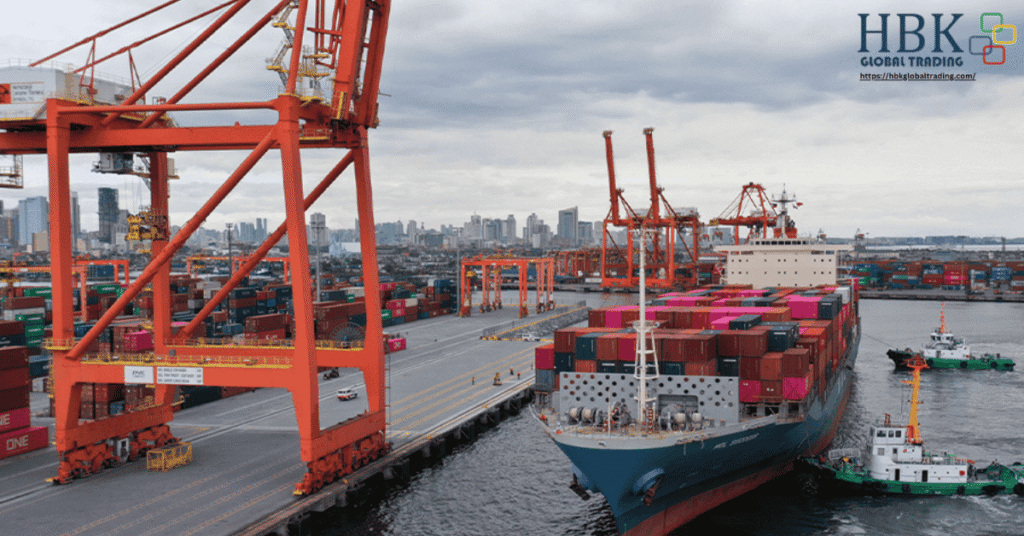
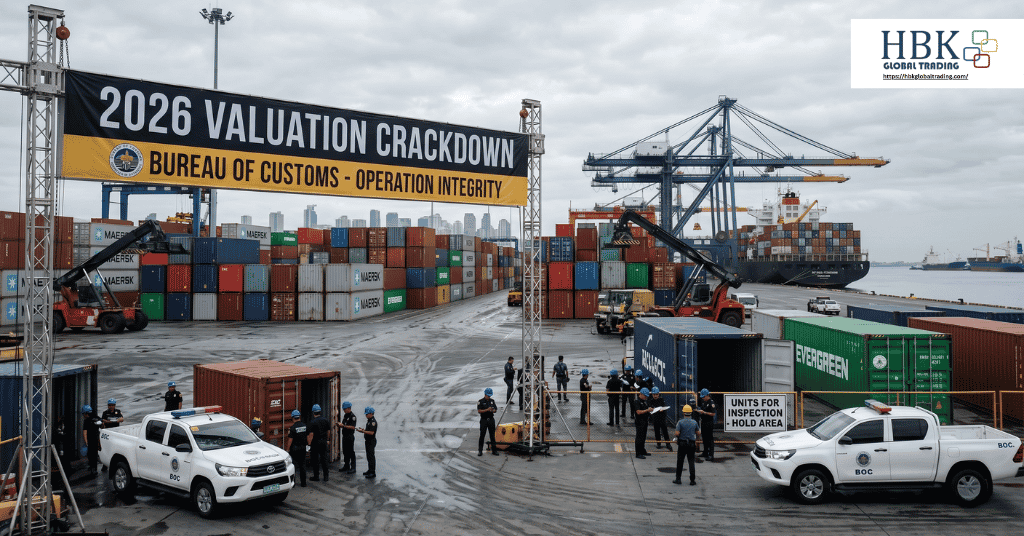
Something big is shifting at the ports right now. In 2026, the Bureau of Customs (BOC) carries its first-ever trillion-peso mandate — a ₱1.003 trillion collection target. That’s up from the ₱934.4 billion it collected in 2025. So what does that pressure mean for you? It means importers now face a serious 2026 valuation crackdown.
Here’s the reality on the ground. Officials are squeezing every shipment to hit that quota. As a result, even tiny paperwork errors now trigger instant Red Lane inspections. And one slip can end in a costly Warrant of Seizure and Detention (WSD). At HBK Global Trading, we refuse to let your cargo fund a government quota. Instead, we build compliant supply chains that route you around the Charge Pile entirely.
Inside the 2026 Valuation Crackdown
You might wonder why every small shipment suddenly draws a flag. The answer is digitalization. BOC now leans hard on strict digital tracking. First, these tools cross-check your goods against e-VRIS value benchmarks — the Bureau’s reference prices for imported items. Then, if your declared value looks even slightly off, the system stops your cargo cold.
The numbers explain the urgency. BOC posted its highest-ever April collection in 2026 at ₱86.4 billion. Officials openly credit “enhanced valuation practices” for the surge. So the message to importers is blunt: every peso of declared value now gets tested.
The Paperwork That Now Gets You Stopped
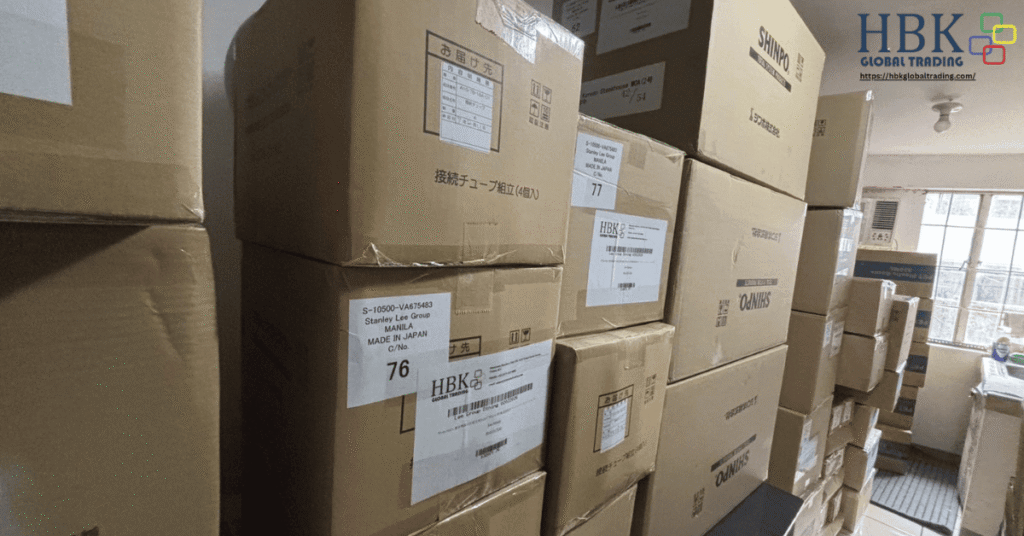
Port officials no longer tolerate messy files. Years ago, a hand-written box label might slip through unnoticed. But today, that same sloppy label guarantees a delay. So the Bureau now demands clear, verified proof of value and origin. And many importers are paying heavy fines — often for nothing more than a supplier’s typo.
How HBK Global Trading Shields Your Cargo
You can’t survive this audit climate by guessing. Instead, you need a proven defense. So we lock your compliance down at the factory — before your goods ever leave. Here’s the three-layer system we run on every shipment.
Our Pre-Departure Defense (3 Layers)
• Strict supplier rules. We route your Chinese suppliers through our automated China Shipping Instructions portal. It catches manual errors before they happen.
• Printed barcodes. Your factory tags every box with a unique printed barcode. So our scanners track each unit without manual entry.
• Expert document checks. Before the ship sails, our brokers review your commercial invoices against current DTI rules.
Each layer closes a gap a BOC examiner would otherwise exploit. Together, they turn a risky declaration into a clean, defensible entry.
Every Route, Same Protection
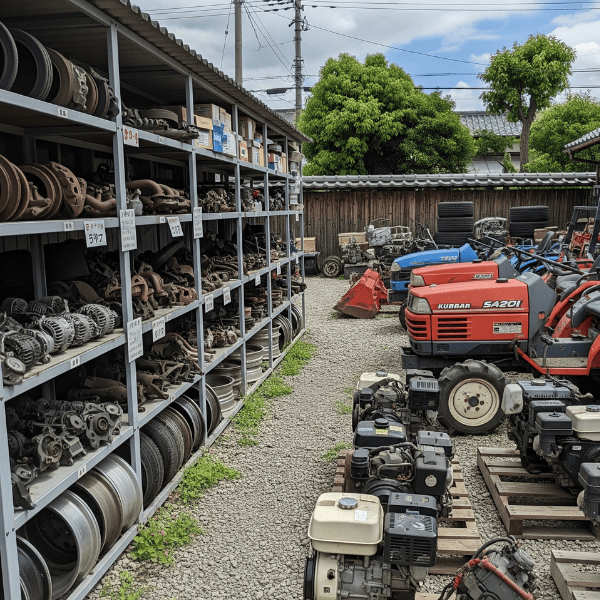
This crackdown hits every incoming shipment, no matter the origin. But we secure your supply lines across every major hub. For instance, we protect cargo from China, Vietnam, Thailand, Singapore, and Malaysia. We also keep complex Japan freight fully documented and compliant. So wherever you source, your goods arrive legally and on time.

Stop Guessing, Start Scaling
The BOC will only tighten its grip as 2026 rolls on. You can’t afford to overpay duties just to fund a quota. After all, a single valuation error can wipe out your whole margin. So partner with HBK Global Trading instead. We act as your shield against the 2026 valuation crackdown, and we handle the hard compliance work. That way, you can focus on what matters: growing your business.
Links & Resources
Keep reading from the HBK Customs Compliance Team:
• China Shipping Instructions (2-Step Protocol)
• Hassle-Free Shipping from China to the Philippines: 2026 Guide
• Importing Surplus Goods from Japan: A Beginner’s Guide
• Sourcing from Taiwan in 2026: Importing High-Value Electronics
• The “Red Line” Rush: Fast Shipping for Urgent Auto Parts
• HBK Global Trading Blog (hub)
Official government references:
• Bureau of Customs (BOC) — collection news & CMOs: https://customs.gov.ph/
• Department of Finance (DOF) — BOC revenue reports: https://www.dof.gov.ph/
• Department of Trade and Industry (DTI) — import/trade rules: https://www.dti.gov.ph/