
South Korea has a powerhouse economy. It is a vital source for electronics, cosmetics, and auto parts for Philippine businesses. Importing from South Korea successfully requires a streamlined logistics partner. This partner must understand the region’s trade lanes. This guide will walk you through HBK’s proven import model. We simplify the entire supply chain for you.
The South Korea Logistics Advantage
South Korea’s modern infrastructure offers exceptional efficiency. This is a clear benefit to importers. Goods move quickly from the factory to the port. The short distance to the Philippines also offers a huge advantage. Therefore, air and sea freight transit times are very fast. This allows you to replenish your inventory quickly.
HBK’s Streamlined Import Process
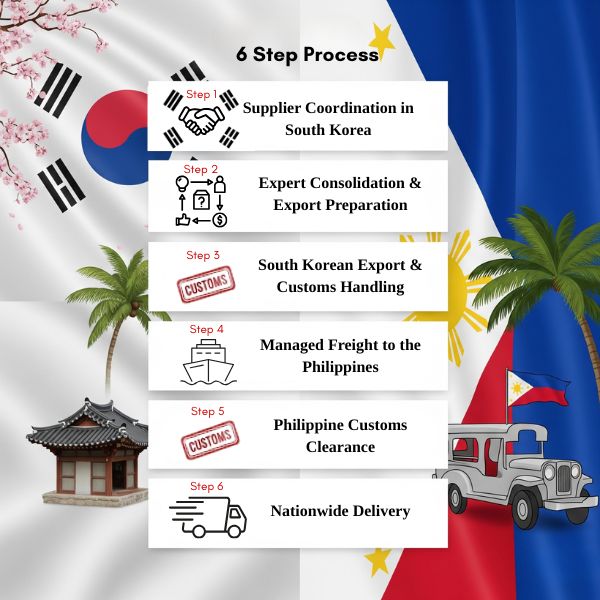
Our proven import model is perfectly suited to the active South Korea-Philippines trade lane. Consequently, we minimize transit time and administrative work for you.
Step 1: Supplier Coordination: We work directly with your Korean supplier. The supplier delivers your goods to our partner warehouse. This warehouse is often near major industrial areas.
Step 2: Export Preparation: Our Korean partners handle consolidation for LCL shipments. In addition, they prepare your FCL container. They ensure all goods are secured for the international journey.
Step 3: Korean Customs: We manage all necessary Korean export documentation. We also handle customs procedures. This ensures full compliance and prevents delays at the origin.

Freight Management and Final Delivery
Choosing the right freight option is key to balancing cost and speed.
Sea vs. Air: Ocean freight is cost-effective for bulk goods. Air freight is an extremely fast option for urgent, high-value cargo. Thus, the choice depends entirely on your cargo’s urgency.
Final Mile: Once cleared, our Nationwide Shipping service takes over. We deliver your goods directly to your warehouse. This service covers your business location anywhere in the Philippines.
Key Considerations for South Korea-Philippines Shipments
Typical Transit Times:
- Sea Freight: From Busan to Manila, sea freight typically takes around 5-9 days, depending on the carrier service.
- Air Freight: From Incheon (ICN) to Manila (MNL), air freight is very fast, usually taking 1-3 days including ground handling.