When sourcing products from international suppliers, many entrepreneurs focus solely on the initial unit price. However, the price you pay the supplier is only the beginning. Understanding the total landed cost of Philippine imports is the most critical factor for accurately pricing your inventory and maintaining a healthy profit margin.
What is Landed Cost?
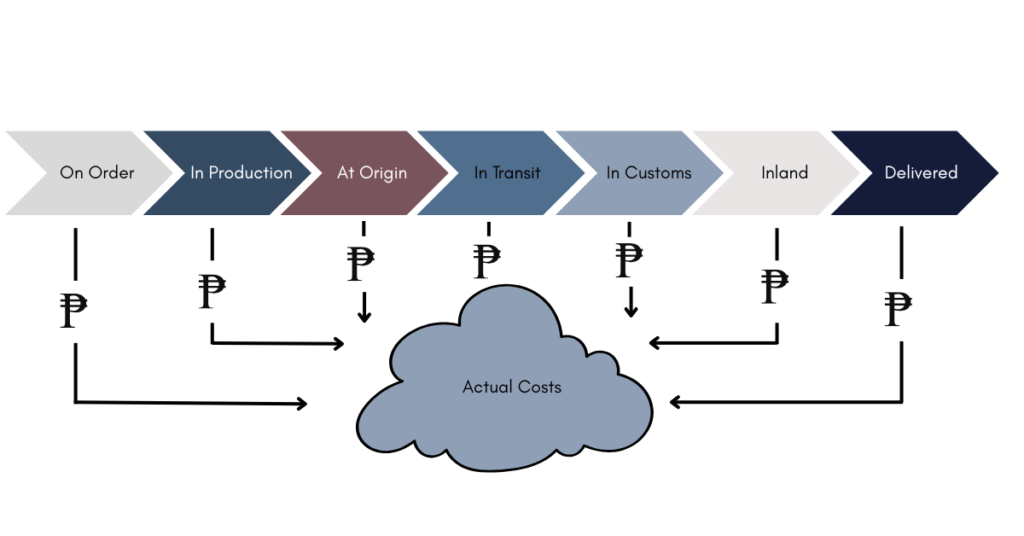
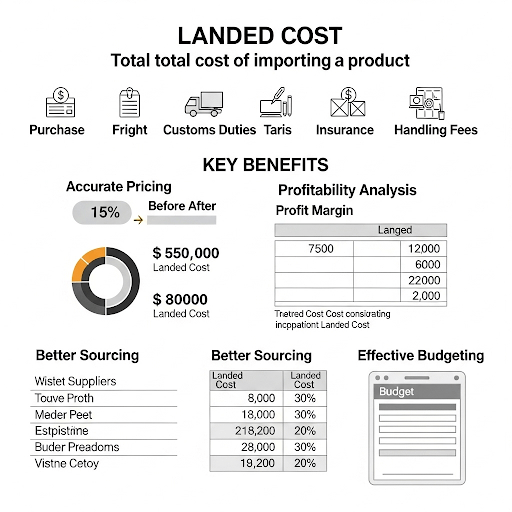
Landed cost represents the total price of a product once it has arrived at your doorstep. This figure includes the original price of the goods, all transportation fees, customs duties, taxes, and insurance.
Consequently, if you fail to account for these “hidden” expenses, you may find that your final profit is significantly lower than expected.
The Core Components of Landed Cost
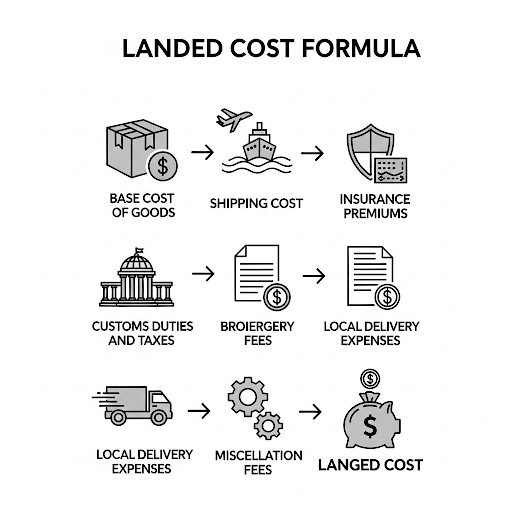
Calculating the landed cost of Philippine imports involves summing several distinct expenses:
1. Product Price (EXW/FOB): The net cost paid to your supplier.
2. Shipping and Freight: The cost of moving your cargo via sea or air. Instead of standard couriers, using a specialized forwarder can often reduce this expense.
3. Customs Duties and Taxes: The Bureau of Customs (BOC) applies specific tariffs based on your product’s HS code.
4.Local Delivery: The final leg of the journey from the port to your warehouse or store.
Detailed Calculation: Beyond the Invoice
Accurate calculation of landed cost Philippine imports requires attention to detail. Therefore, gather documentation carefully.
Freight Charges: Freight fees depend on the shipping method. Ocean freight charges usually vary based on container volume (CBM). Air freight is based on dimensional weight.
Local Charges: Terminal handling charges and local trucking fees apply upon arrival.
Insurance Costs: Always insure your cargo. The insurance premium is a small fraction of the total cost. In addition, it provides critical protection against major loss.
The Impact of Duties and VAT
Duties and VAT often represent the largest hidden variable in landed cost Philippine imports. These fees are unavoidable.
Import Duties: The rate is determined by the Harmonized System (HS) code of the product. The BOC uses this rate to assess the import duty. Therefore, correct HS classification is essential.
VAT: A 12% Value-Added Tax is charged on the total customs value. The customs value includes the price, freight, insurance, and import duties.
Ensuring True Profitability
Accurate landed cost calculation is a strategic necessity. By factoring in every variable, you ensure true profitability. Use a reliable partner like HBK Global Trading. They provide transparent logistics costs. This eliminates guesswork in your landed cost Philippine imports.