
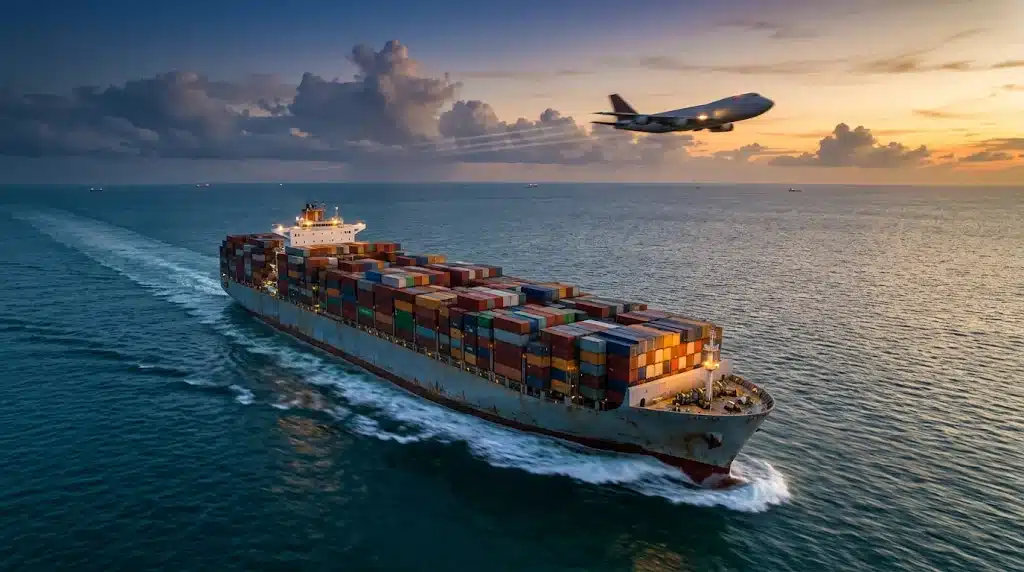
Here is a conversation we have with importers more often than you might think. A quote shows a short sailing time, the client counts the days from their supplier’s factory to their own receiving bay, and the two figures don’t match. Usually, both are correct. When people talk about China to Philippines shipping lead time, a vessel estimate tends to cover only the sea leg, while the importer is counting everything from supplier handover through delivery to the business address.
So before you judge any shipping time for shipping from China to the Philippines, ask three questions:
This guide is for Philippine business owners, purchasing teams and importers who plan inventory, equipment or project deliveries around a shipment. It explains what a sea freight estimate usually measures, what happens on either side of the voyage, and which date your business should actually plan around. Getting this right matters because a misread estimate becomes a missed launch, an empty shelf or an installation crew waiting on equipment. The guide covers timing only. For shipping costs, we quote against your actual cargo rather than publishing rates.
Which Part of the Journey Does Your Shipping Estimate Cover?
Every estimate measures the time between two events. The trouble is that different parties pick different events, and the table below shows the four you’ll meet most often.
| Timing reference | What it measures | Worth knowing |
| Sailing or port-to-port transit time | The quoted interval between specified departure and arrival events | A scheduled service may include intermediate port calls or connections, so it isn’t always uninterrupted time at sea. |
| Warehouse-to-warehouse lead time | The interval between agreed origin and destination warehouse milestones | Supplier collection, and delivery beyond the destination warehouse, may sit outside it. |
| Supplier-to-door lead time | The interval from the agreed supplier handover or collection point to the named delivery address | The starting event and included services must be defined. |
| Vessel ETA | An estimated arrival date or time at a named location | It is not automatically the cargo-release or customer-delivery date. |
Transit Time vs Lead Time: Why the Labels Overlap
In sea freight, shipping lines, freight forwarders and suppliers each tend to quote from the milestones they control. A carrier’s transit time usually describes the sailing. A forwarder’s lead time may run warehouse to warehouse, or further. That is why transit time vs lead time is one of the most common mix-ups in international shipping.
Don’t assume either label has one universal meaning. Ask for the start and end events in plain words. Our guide to door-to-door and port-to-port scope explains how these service boundaries are set.
Does Lead Time Start When You Pay Your Supplier?
Usually not. Supplier production time is not freight time.
Paying a deposit, or receiving a “goods ready” date from the factory, doesn’t mean the freight journey has begun. Supplier preparation, and the trucking from the factory to an origin warehouse or export port, happen first. Both affect when cargo can actually depart.
For most HBK sea shipping, the freight timeline starts when your supplier delivers the labelled cartons to our China warehouse, or when the agreed collection takes place. Anything earlier sits on your supplier’s calendar.
Why Published Sailing Times Look So Different
Search for the shipping time from China to the Philippines and you’ll find very different numbers. One international digital forwarder publishes port-to-port examples for this lane ranging from about 9 to 31 days, depending on the ports involved and whether cargo moves LCL or FCL.
Those figures describe the sea leg between two ports. They leave out supplier handover, origin handling, release in Manila and delivery to your address. That is why we treat any single published number as a starting point for questions, not a delivery date.
What Happens Before the Vessel Leaves China?
Plenty happens before any vessel sails, and little of it shows on a sailing schedule. The origin stage is where the sea leg and the full lead time first start to separate.
Supplier Handover and Receiving at Our China Hubs
At our consolidation hubs in Guangzhou and Yiwu (shipments that need a formal customs declaration go through Shenzhen), the origin stage begins with handover or collection. Each carton is scanned against your HBK Customer ID and checked against the cargo information you and your supplier provided.
That is why “received at the China warehouse” doesn’t mean “loaded on the vessel” or “departed.” It means your cargo is in our hands and the origin stage has started.
HBK doesn’t repack or palletize at origin, so cartons should arrive in their final packing format. Unlabelled or loosely packed cartons are among the most avoidable reasons cargo waits.
Export Documents and Departure Preparation
Before shipping goods out of China, the export paperwork has to line up: a commercial invoice that matches the actual cargo, a packing list, and any export processing the shipment needs.
Bulk cargo and heavy cargo may need extra preparation before loading, but cargo size alone doesn’t decide the lead time. What decides it is how completely each origin step is finished before the departure it is aiming for.
LCL Consolidation: Sharing Container Space
LCL shipping is a sea freight shipping service in which your goods share container space with other importers’ commercial cargo. Grouping consignments at origin, and separating them again at destination, is part of what makes LCL shipments economical. It is also part of the overall timeline.
How much consolidation adds depends on the shipping route and departure schedule, so we don’t attach a fixed figure to it. A full container load skips the shared-container step, because the container is sealed at origin for one shipper. Our LCL shipping page walks through how consolidation works.
Departure Schedules and Cut-Offs
Sailings from major Chinese ports follow schedules and cargo acceptance requirements set by shipping lines. Cargo that misses one waits for the next sailing on that shipping route, and that wait belongs to the lead time even though no vessel has moved. Our guide to cargo readiness and departure cut-offs covers this in detail.
What Still Needs to Happen After the Vessel Reaches the Philippines?
Arrival is a milestone, not the finish line. Depending on the agreed shipping service, what follows can include discharge, cargo availability at the terminal, customs clearance and carrier release requirements, LCL deconsolidation, collection arrangements and final delivery in the Philippines.
Three distinctions keep expectations honest:
- Vessel arrival doesn’t establish that cargo is available for collection.
- Customs release doesn’t establish that delivery has been completed.
- Arrival at a Philippine warehouse doesn’t establish delivery to your business address.
Pre-Arrival Work Starts While Cargo Is at Sea
Not everything waits for the vessel to dock. Philippine customs regulations build in a pre-arrival stage, with carriers lodging the cargo manifest electronically with the Bureau of Customs before the vessel arrives.
Our customs compliance team uses the voyage the same way. We check the Bill of Lading, Commercial Invoice and Packing List against each other while cargo is still at sea, so release can follow promptly once requirements are settled. Whether the entry is handled by HBK or by a customs broker you appoint, this part of the shipping process runs in parallel with the sailing, not after it.
Documents That Shape Release
Efficient customs clearance isn’t something anyone can promise. It is the result of paperwork that matches the cargo. Complete documents, accurate HS codes and a declared cargo value consistent with the invoice all reduce the reasons for review. Missing or incomplete documents can hold a shipment for days or even weeks, and incorrect declarations can lead to delays or penalties.
Regulated products such as food, cosmetics or electronics with radio functions may need additional permits, and a missing permit can hold a shipment. Release also depends on settling import duties and taxes: customs duties follow the product’s HS classification, and import tax includes 12% VAT. That is a release-readiness step rather than a timing estimate, which is why we review documents early. See how our customs clearance and cargo release support works.
From Manila Release to Your Business Address
For LCL, there’s an HBK-specific detail worth knowing: our releasing facility for LCL cargo is in Manila. A shipment bound for Cebu or Davao is released in Manila first, then handled again for the domestic leg through our nationwide delivery service.
Inland transport, whether across Metro Manila or to a provincial address, is part of the door-to-door shipping time, not an add-on. With sea freight to the Philippines, this last stretch is often what separates “the vessel is in” from “the stock is on our shelves.” For the next steps, read what happens after cargo arrives in Manila, and why LCL cargo needs destination handling.
Does the Same Logic Apply to FCL, Air Freight and Express Shipping?
Yes. Across sea and air freight, every shipping method has a start event, an end event and work on either side of the main leg. Only the proportions change across shipping modes. We’ll keep this to timing, since choosing the right shipping method among your shipping options is a separate decision.
Does a Longer Door-to-Door Lead Time Mean the Shipment Is Delayed?
Not automatically. A longer supplier-to-door figure can simply reflect a broader measurement period. A delay is a departure from the agreed plan, and it should be measured against the relevant planned milestone, not against the sailing time.
Picture two commercial shipments on the same vessel, between the same ports.
Holds an estimate that ends when the vessel arrives in Manila.
Holds one that runs from supplier handover to delivery at the branch.
The second figure is longer, yet nothing has gone wrong. Their quoted durations simply cover different scopes, and only the second describes the entire process.
What Can Legitimately Change an Estimate
Not every longer timeline is normal, though. Typhoons and severe weather in the Philippine Sea, port congestion, peak-season surges around Chinese New Year and the run-up to Christmas, and carrier schedule changes can all revise an estimate after departure.
That is a different situation, covered in why a vessel ETA can change.
Which milestone moved, and against what baseline?
Which Date Should a Business Use for Its Receiving Deadline?
If stock or equipment needs to be at your premises by a certain day, the date that matters is the estimated delivery window for that address. A vessel ETA alone can’t give you that.
Every business has different shipping needs. Think of a retailer bringing in replenishment stock ahead of a sale, or a contractor waiting on equipment for an installation date. Before building plans around any number, ask:
- Does the estimate begin at supplier collection, warehouse receipt or vessel departure?
- Does it end at port arrival, warehouse availability or final delivery?
- Is the duration counted in calendar days or working days?
- Which milestones have already happened, and which are still estimates?
- What assumptions could change the delivery window?
For time-sensitive shipments, these answers say far more about your door-to-door shipping time from China to the Philippines than any headline figure. They also let your purchasing and receiving teams plan around the same baseline across the supply chain.
Planning Around Urgent and High-Priority Shipments
For urgent shipments and high priority shipments, share your required receiving date first, not last. It shows which milestones have the least room and whether the agreed shipping service fits the deadline.
We won’t promise timely delivery against a date we haven’t reviewed. What we can do is show you where the timeline is tight before your cargo leaves China.
Ask HBK to Confirm the Timeline for Your Shipment
Since 2011, our team in Quezon City has helped Philippine businesses move cargo from China through each of these stages. Many of the timing surprises we’re asked about come from comparing estimates that measure different things, and a shipment review sorts that out early.
Why Fewer Hand-Offs Mean Fewer Timing Surprises
Most lead-time surprises happen at hand-offs: supplier to origin warehouse, warehouse to vessel, terminal to customs, release to truck. The efficiency of the whole logistics chain, including customs and local transport, shapes the lead time far more than the sailing alone.
That is why using one freight forwarder for the entire process can simplify door-to-door shipping. At HBK, the same team follows your shipment from our own China warehouses through in-house customs work, acting as importer of record where the arrangement applies, to nationwide delivery. One timeline, one point of contact, and one baseline to measure every milestone against.
What to Send Us
- Cargo description and shipment details
- Supplier location in China
- Expected readiness or handover date
- Philippine delivery address
- Required receiving date
What Your Shipment Review Covers
- The proposed service scope
- The timing baseline, with its start and end events named
- Expected milestones from origin handover through delivery
- A delivery estimate for your address
Whichever logistics partners or logistics providers you compare, ask each one for those same four things. It’s the quickest way to see whether two estimates are measuring the same journey.
Share your cargo details, supplier readiness date and Philippine delivery address with HBK so the shipment timeline can be reviewed from the agreed origin handover through delivery.