By the HBK Global Trading Customs Compliance Team | Updated October 2026
An all-in freight rate from China to the Philippines sounds like the end of the conversation. Really, it’s the start of a better one. The label on its own doesn’t tell you where pickup happens, where delivery ends, how duties and taxes are treated, whether cargo insurance is covered, or what happens if something unusual comes up along the way.
There’s a difference between a bundled price and a fully defined quotation. A bundled price is a number. A defined quotation names the cargo, the services, the locations, the pricing basis and the conditions behind that number. When you’re comparing shipping costs from China, the second one is the only version worth comparing.
We’ve been quoting this route for Philippine importers since 2011, and the shipments that turn stressful are rarely the ones with the highest rate. They’re the ones where nobody wrote down what the rate covered. Here’s how to read an all-in quote for shipping from China to the Philippines before you commit.
What Does “All-In” Mean in a Freight Quote?
An all-in freight rate bundles the charges for a stated service scope into one price. The word doing the heavy lifting there is “stated.”
The three boundaries of every all-in rate
1. Where the quoted service starts — your supplier’s premises, a receiving warehouse in China, or another named location.
2. Where the quoted service ends — a Manila warehouse, a collection point, or your business address.
3. What the price assumes — the cargo details, the shipping mode and the service conditions it was built on.
Freight forwarders don’t all draw those boundaries in the same place, so two shipping rates carrying the same label can cover very different ground. One quote may cover the entire process from receipt in China to your door; another may cover only part of the shipping process and leave the rest to you.
Freight price versus your total business cost
An all-in freight quotation is not your complete business cost. Buying the goods, paying your supplier, financing the order and other commercial expenses sit outside a freight price unless a separate service covers them. That said, a well-defined all-in quote is still the most useful number you’ll get for working out a true landed cost, because it turns the logistics side into something you can actually predict.
All-in, door-to-door and DDP are not the same thing
Door-to-door shipping describes a delivery scope: pickup or receipt at origin through to your address. Some offers stop at the port or a warehouse instead, and that difference alone can move your final logistics cost.
DDP (Delivered Duty Paid) is something else again. It’s an Incoterms® rule that allocates obligations between buyer and seller under the sale contract, and it generally places transport, import clearance and import duties on the seller. The ICC Academy notes that a foreign seller may find import clearance difficult under DDP. That’s one reason many Philippine buyers prefer a local partner on the import side, and why HBK can act as importer of record where the arrangement applies. Either way, a forwarder’s quotation still needs its own defined scope. We cover the trade terms separately in our guide to buyer and seller responsibilities under Incoterms.
Which Shipping Mode Does the Quote Assume?
An all-in rate is always built on a specific transport service, so whether you’re choosing air or sea freight, the quote should name it. Your shipping options broadly look like this, and each one changes what “all-in” is measured against.
Air freight to the Philippines
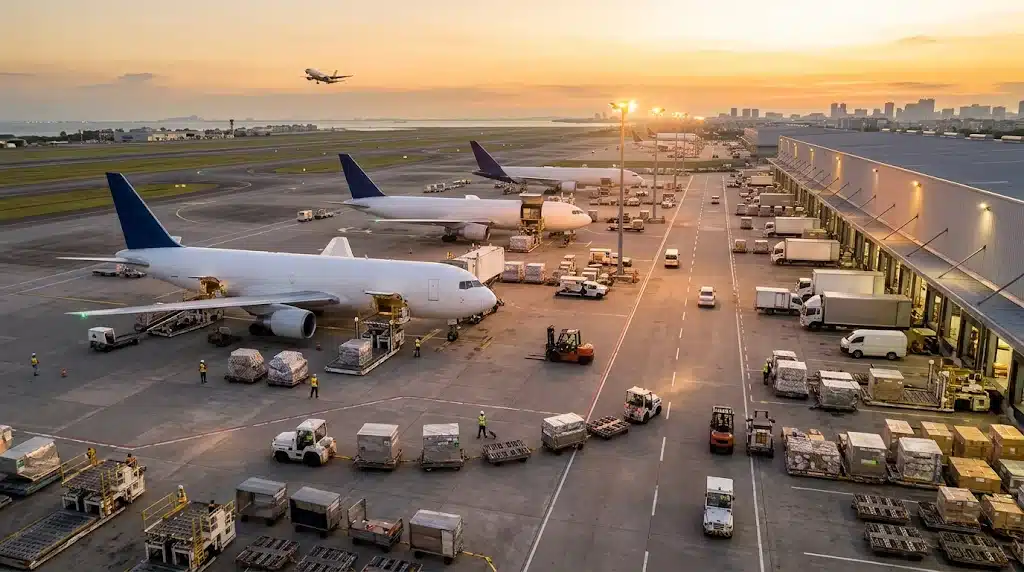
Air freight is the usual choice for urgent shipments, high-priority shipments, high-value goods and time-sensitive cargo, where timely delivery matters more than the freight bill. Philippines air freight is priced on chargeable weight, so an all-in air rate should state that basis and whether air cargo handling at destination is included. As a planning estimate, not a guarantee, HBK air shipments typically take about 3–4 days, and sea freight from our Asian origin markets about 21–30 days. Typical transit times like these are a shipping time assumption in your quote, separate from clearance and final delivery.
Sea freight from China
Sea freight is generally the most economical option for large shipments and bulk cargo. On China sea freight, the quote should say whether you’re buying LCL shipping, where your goods share container space with other importers to reduce costs, or a full container load, which suits high-volume cargo. If a forwarder offers FCL and LCL services, make sure the all-in rate you’re reading matches the container load you actually need.
Cargo typically leaves from major Chinese ports such as Shenzhen, Guangzhou (Nansha), Shanghai or Ningbo, and arrives through major ports in Manila, including Manila International Container Terminal and Manila North Harbor. Sea freight routes, transshipment and shipping lines can differ between offers. What matters for your Philippines sea freight quote is less which vessel or port is used and more whether destination handling at that port sits inside the price.
Express services and mixed shipments
Express shipping is built for small parcels and samples, and express services usually quote door to door by weight. Some importers end up combining air and sea on one order: urgent stock by air, the rest by sea shipping. That’s fine, but each leg needs its own scope line. Sea and air freight priced together under one headline number is harder to check, so ask for the split if you book air and sea freight on the same order.
Which Costs Should the Written Quote Address?
Use the table below as a quotation-review checklist. It isn’t a list of charges every provider automatically includes. It’s the set of questions a clear quote should already answer before you approve it.
| Cost category | What the quotation should clarify |
| Origin collection | Whether the service starts at the supplier’s premises, a receiving warehouse or another named location. |
| Origin handling and documentation | Which receiving, handling, export-processing and documentation services are covered. |
| International transport | The transport service and the applicable carrier charges included in the quoted amount. |
| Destination handling | Whether relevant terminal, cargo-release and handling charges fall within the package. |
| Customs clearance services | What clearance or brokerage work is included. |
| Import duties and taxes | Whether these are included, estimated separately or payable outside the quoted amount. |
| Philippine delivery | Whether the endpoint is a warehouse, a collection location or a specified business address. |
| Cargo insurance | Whether insurance has been arranged and included, or requires a separate agreement. |
You need scope clarity, not the forwarder’s margin
A single bundled amount can still come with a written inclusions schedule. You don’t need a forwarder’s internal cost breakdown to make a good decision. You need to know what’s in scope, and you’re entitled to see that in writing.
Comparing quotes on equal terms
That’s how you compare logistics providers and shipping companies fairly: the same shipping route, the same cargo handling and documentation handling, and the same final delivery point, whether that’s trucking services to your door or a warehouse pickup. For Philippines final delivery outside Metro Manila, the quote should name the city and the address type. Philippines shipping quotes that just say “delivered” leave too much open when you’re shipping goods to a province. If the endpoints differ, our guide to delivery scope and shipment responsibilities explains why the prices won’t line up.
Does “Customs Clearance Included” Also Mean Duties and Taxes Are Included?
Not necessarily, and it’s one of the distinctions we see blurred most often.
A clearance service is not the same as government charges
Customs clearance is a service: preparing the entry, classifying the goods and coordinating release with the Bureau of Customs. Import duties and taxes are government charges on the goods themselves. A quote can include one without the other, whether the clearance work is done by a customs broker or a forwarder’s own team.
The Bureau of Customs regulates imports under the Customs Modernization and Tariff Act (CMTA, RA 10863), and its importation guidance states that goods imported into the Philippines are subject to duty and tax unless the CMTA or another law provides otherwise. A commercial all-in arrangement doesn’t create an exemption from customs regulations. It only settles how those customs duties and import duties are handled and billed.
Why the declaration behind the quote matters
The duty and tax side of an all-in quote is only as reliable as the shipment information behind it. Accurate tariff classification can, where a certificate of origin applies, qualify goods for preferential treatment under agreements such as ATIGA or RCEP. Incorrect declarations, on the other hand, can lead to delays and penalties, and regulated items may need additional permits before they can be imported at all. That’s why our team reviews documents against the actual cargo before it arrives.
How HBK treats duties and taxes
At HBK, our standard approach is an all-inclusive quotation that accounts for customs duties and taxes on the declared shipment, with customs clearance coordinated by our in-house customs compliance team rather than passed between local customs brokers. Even so, your actual shipment quotation is what sets the terms, so read it with two questions in mind:
1. Does the quoted amount include the applicable duties and taxes for the declared shipment?
2. If the assessment or a shipment detail changes, what does the agreement say about any resulting difference?
A change doesn’t automatically become your extra bill. That depends on what changed and on what your quotation says.
What May Be Excluded or Charged Only Under Certain Conditions?
Some items may need a separate agreement, depending on how your quotation is written:
| Category | Examples to discuss |
| Services outside the stated endpoints | Supplier collection before the agreed receiving point, or onward delivery beyond the quoted destination. |
| Additional requested services | Repacking, special handling, storage, or cargo insurance not included in the original scope. |
| Shipment-specific requirements | Handling arrangements needed for the actual commodity, packaging or cargo dimensions. |
| Conditional events | Examination-related handling, extended storage, waiting or redelivery, where the agreement identifies how these are treated. |
A disclosed condition versus hidden fees
None of these are universal exclusions, and none are automatically valid add-ons. What separates a fair charge from hidden fees is disclosure. The charges that most often catch importers off guard are storage, examination-related handling and delivery to an area the quote never named. A condition written into your quotation before you approved it is part of the deal. A charge that turns up later with no explanation is something else, and you’re entitled to ask what triggered it, what supports it, and which part of the agreement it falls under. On an HBK shipment, our team will walk you through exactly that.
Packing and cargo insurance
Our China consolidation warehouses receive cargo in the packing format your supplier hands over, so packing choices are best settled with your supplier before dispatch. And cargo insurance isn’t automatic in any all-in rate, ours included. It’s optional, arranged separately, and its coverage should be confirmed in writing. You can review our cargo insurance options before you ship.
Can an All-In CBM Rate Still Produce a Different Total?
Yes, and that isn’t a contradiction.
Unit rate versus shipment total
An all-in CBM rate is a unit price. The shipment total is that rate applied to the confirmed billing basis: for LCL shipping, usually the cargo volume, and for air, the chargeable weight rather than the cargo weight alone. The same logic holds whether you’re moving a few cartons or large shipments of bulk cargo. Three things keep the number honest:
• A per-CBM rate needs a confirmed billing basis, not only a supplier’s early figures.
• An estimate built on preliminary shipment information should be clearly labelled as an estimate.
• A revised total should come with an explanation of what changed.
A simple example
Your supplier shares a carton count, you receive an all-in estimate, and then the supplier adds extra protective packaging before handover. The shipment information behind the quotation has changed, so it needs a review. That doesn’t mean an automatic surcharge. It means the figures get checked against the cargo that actually arrived. Accurate weights and dimensions from the start are the easiest way to avoid that review, and to avoid delays later at customs. For the mechanics, see how freight pricing units work and why final cargo measurements can differ.
Quotation validity and peak seasons
Every all-in quote also has a validity period. Space tightens in the weeks around Chinese New Year and during the fourth-quarter holiday rush, and rates can move with it. For time-sensitive shipments especially, check how long your quote holds and what happens if cargo isn’t ready within that window.
What Should HBK Confirm Before You Approve the Quote?
What to send us
Whether you’re one of the e-commerce sellers restocking inventory or a business importing industrial equipment, a properly defined quotation starts with the same information:
• Product description
• Packed shipment details: carton count, dimensions and weight
• Origin location in China
• Philippine delivery address
• Requested services, such as customs clearance, cargo insurance or delivery
What the quote should settle
From there, our conversation with you should settle four things: the included services and named endpoints, any exclusions and conditional charges, the pricing basis and how long the quotation stays valid, and how changes will be communicated and assessed.
Why two headline rates don’t always compare
Quote A ends at a Manila receiving warehouse. Quote B includes delivery to your business address in Cebu. The headline rates aren’t comparable until you know that. Because HBK releases LCL cargo in Manila, a provincial delivery is a separate domestic leg, and it should be named in your quote.
That’s also why the cheapest shipping rate on paper isn’t always the cheapest total. A cost effective shipping method only proves its cost efficiency once the inclusions match. Talk of the best freight forwarder, a reliable logistics partner, consistent service or excellent customer service is easy to make and hard to check. A written scope is easy to check. The right freight forwarder for your shipment is the one whose quote you can read line by line.
One point of contact, and paying on arrival
Working with one provider across the full route also simplifies coordination. Your cargo is tracked by barcode under your HBK Customer ID from our China warehouse onward, and our customs compliance team handles the Philippine side. Because HBK works on a pay-on-arrival basis, you settle once your cargo is actually here, against a quotation you’ve already read, with a BIR-issued invoice for your records.
Planning a shipment from China? Send HBK your cargo details, pickup location and Philippine delivery address so the quotation can clearly identify the included services and applicable conditions. Request a shipment quotation.
Links & Resources
• Shipping from China to the Philippines — HBK Global Trading
• Request a shipment quotation — HBK Global Trading
• Cargo Shipping Insurance — HBK Global Trading
• Incoterms® 2020: DAP or DDP? — ICC Academy
• Importation guidance — Bureau of Customs, Republic of the Philippines